Islamabad: Failed Talks and Open Questions
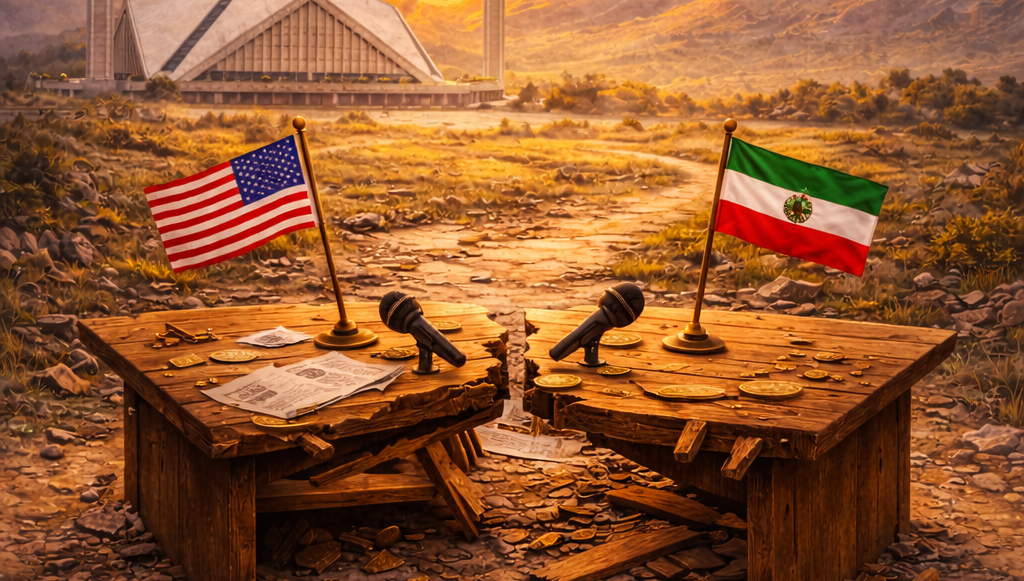
The failure of the talks between the United States and Iran in Islamabad was not a routine political setback, but rather a revealing moment that highlights the depth and complexity of the relationship between the two sides. After long hours of negotiations, the discussions ended without clear results, reflecting that the dispute is no longer confined to technical details, but is instead rooted in fundamentally different visions of regional balance and future influence.
According to the latest developments, the disagreements centered on familiar issues, most notably Iran’s nuclear program, sanctions, and strategic concerns related to vital maritime routes such as the Strait of Hormuz. The United States sought strict guarantees to limit Iran’s capabilities, while Tehran viewed these demands as تجاوزing acceptable negotiation boundaries and infringing on its sovereignty. This gap in positions made reaching an agreement difficult—if not impossible—at this stage.
From a straightforward analytical perspective, it can be said that the United States did not achieve its intended goals in this round. Entering negotiations without tangible progress weakens the perception of its influence, particularly when the opposing side demonstrates resilience and refuses to make concessions. Moreover, the discussion of alternative measures such as intensified sanctions or even a naval blockade suggests a shift from diplomacy toward more coercive tools, a move that carries significant risks.
On the other hand, Iran appears to be pursuing a strategy of patience and endurance. While it has not offered major concessions, it has also avoided completely closing the door to future negotiations. This approach provides Tehran with flexibility—whether by continuing dialogue under revised terms, strengthening ties with other global powers, or leveraging its geographical position and regional role as strategic assets.
Drawing from personal experience outside the realm of military expertise, the situation can be likened to flying through unstable weather conditions: there is no immediate decision to land, yet continuing on the same course without adjustment is not viable. Each side is attempting to buy time, reassess its trajectory, and avoid steps that could trigger uncontrolled escalation.
Looking ahead, the situation remains open to multiple scenarios. There may be a return to negotiations, albeit under more complex conditions, or a gradual escalation through economic and political means. In a worst-case scenario, tensions could expand across the region, particularly if this crisis intersects with other ongoing conflicts.
Ultimately, what happened in Islamabad should not be viewed as a temporary failure, but as an indication that the rules of the game are changing. Decisions are no longer easily imposed, and no single actor can fully dictate outcomes. In the meantime, the region remains in a state of anticipation—like a journey whose destination has yet to be determined.