Gulf Air: When Bahrain Became Part of the Journey
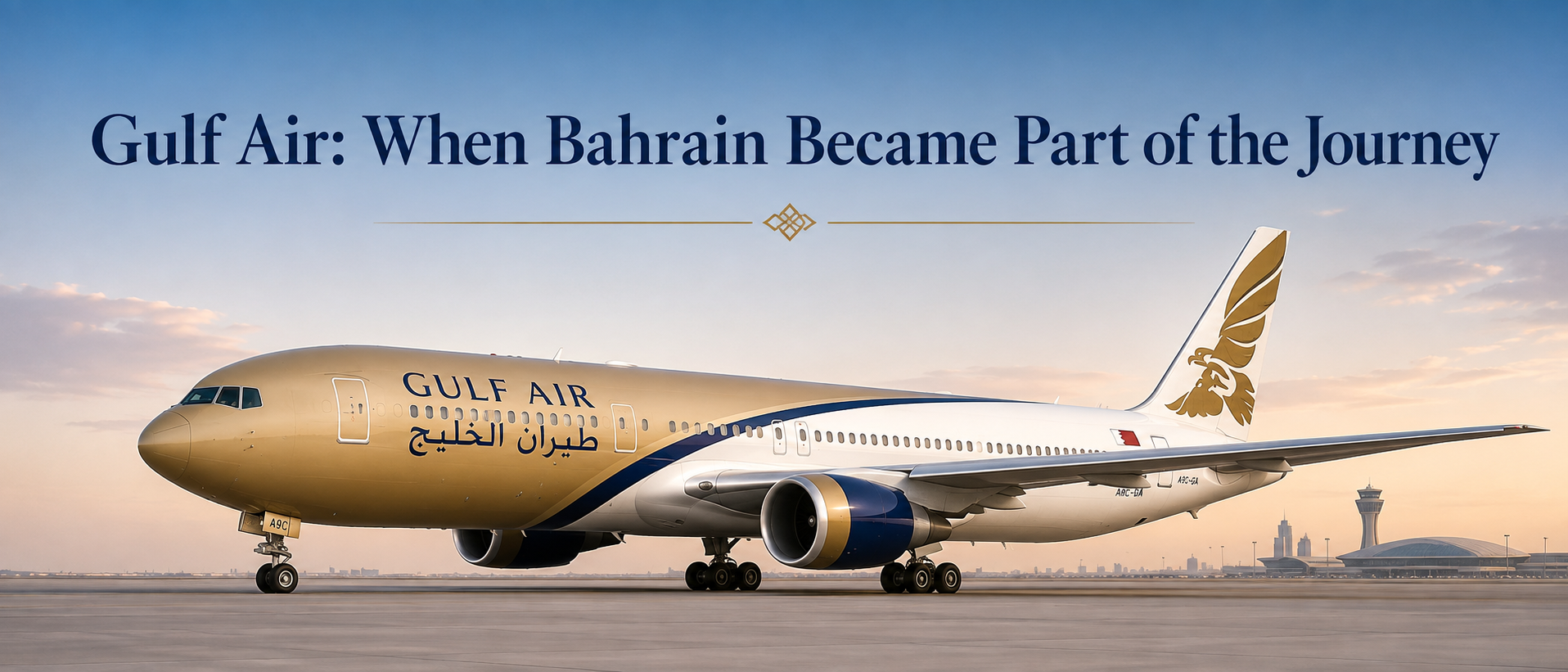
Some of life’s most important transitions begin quietly. They do not announce themselves as turning points. They arrive disguised as a new assignment, a different address, or another name on a company badge. Only years later do we understand that we were not simply changing jobs. We were becoming someone new.
When I moved to Bahrain to join Gulf Air, I believed I was entering another professional chapter. I soon discovered that I had stepped into a much larger experience—one that would reshape my understanding of aviation, responsibility, friendship, and belonging.
Aviation had already taught me that knowledge alone was never enough. A pilot could master procedures, systems, and calculations, yet still need the humility to listen, the discipline to remain calm, and the judgment to recognize that no amount of experience makes a person incapable of error. In a new company, among colleagues from different cultures and professional backgrounds, those lessons became even more important.
Gulf Air was not simply a workplace. It was a school of shared responsibility.
An aircraft does not rise because of one person in the cockpit. Every safe departure depends on a chain of people whose work may never be seen by the passengers: engineers, dispatchers, ground crews, cabin crews, controllers, planners, and technicians. Each person carries a part of the flight long before the wheels leave the runway.
That understanding changes the meaning of leadership. Leadership is not standing above others. It is knowing how deeply you depend on them.
Inside the aircraft, titles mattered less than trust. Pilots and cabin crew were not separate groups performing unrelated tasks. We were one team, connected by a responsibility larger than any individual role. We learned to rely on one another’s preparation, awareness, and professionalism. The strongest bonds were not built through formal meetings or company speeches, but through long days, difficult weather, unexpected situations, and the quiet knowledge that everyone had to do their part.
Every flight also became an encounter with a wider world. Cities were no longer names printed on a schedule. Airports were no longer technical points of departure and arrival. Each destination became a window into another way of living, believing, working, and understanding time.
The more I traveled, the more I noticed a simple truth: people differ greatly in language, custom, and appearance, yet they remain remarkably similar in what they fear, what they hope for, and whom they wait for at the end of the day.
Bahrain gave that professional experience its human dimension.
In Busaiteen, I found a quiet rhythm that balanced the demands of flying. After long hours in the air, there was something restorative about returning to a place that felt calm, familiar, and close to the sea. Life there was not defined by spectacle. Its warmth came from ordinary encounters—a greeting from a neighbor, a conversation that was not rushed, a sense that hospitality was not a performance but a natural way of receiving another human being.
Over time, Bahrain became more than the country where I worked. It became another form of home.
A second home does not replace the first. It enters the heart differently. It does not ask you to abandon your roots. Instead, it adds another layer to your understanding of belonging. It teaches you that a person can remain faithful to where he came from while still allowing another place to shape him.
Those years also taught me something about balance. Aviation demands strict discipline, but also the flexibility to respond when conditions change. It requires confidence, but confidence without humility can become dangerous. It requires decisive action, but the best decisions are rarely born from impulse. They are usually the result of preparation, experience, and inner calm.
These principles did not remain inside the cockpit. They became a way of understanding life.
We all need procedures, but life cannot be lived entirely by checklist. We need confidence, but not the kind that closes the mind. We need ambition, but not at the cost of gratitude. And we need movement, though not every movement is progress.
When I look back now, I do not measure those years by the number of flights or hours recorded in a logbook. I remember the people, the trust, the unfamiliar situations that made me grow, and the feeling of returning to Bahrain after each journey.
A career is often described through positions, aircraft types, and dates. But the deeper record is written elsewhere. It lives in the places that changed us, the people who trusted us, and the lessons we carried long after the job itself was over.
I eventually left Bahrain, but some departures are only physical. Busaiteen remained in my memory. So did the faces of colleagues, the discipline of the work, and the sense of belonging that formed slowly and without announcement.
Gulf Air was an important chapter in my professional life, but it was also a chapter in my formation as a human being. Bahrain was a place where I worked, yet it became something more enduring: a quiet home in memory.
Some flights end when the engines shut down.
Others continue inside us for the rest of our lives.